King Boletes Rise
King Boletes Rise
47/72: Aug 23 to 27
King boletes rise near mountain streams. Porcini in the cool, shaded moss.

風物詩 · Fūbutsushi
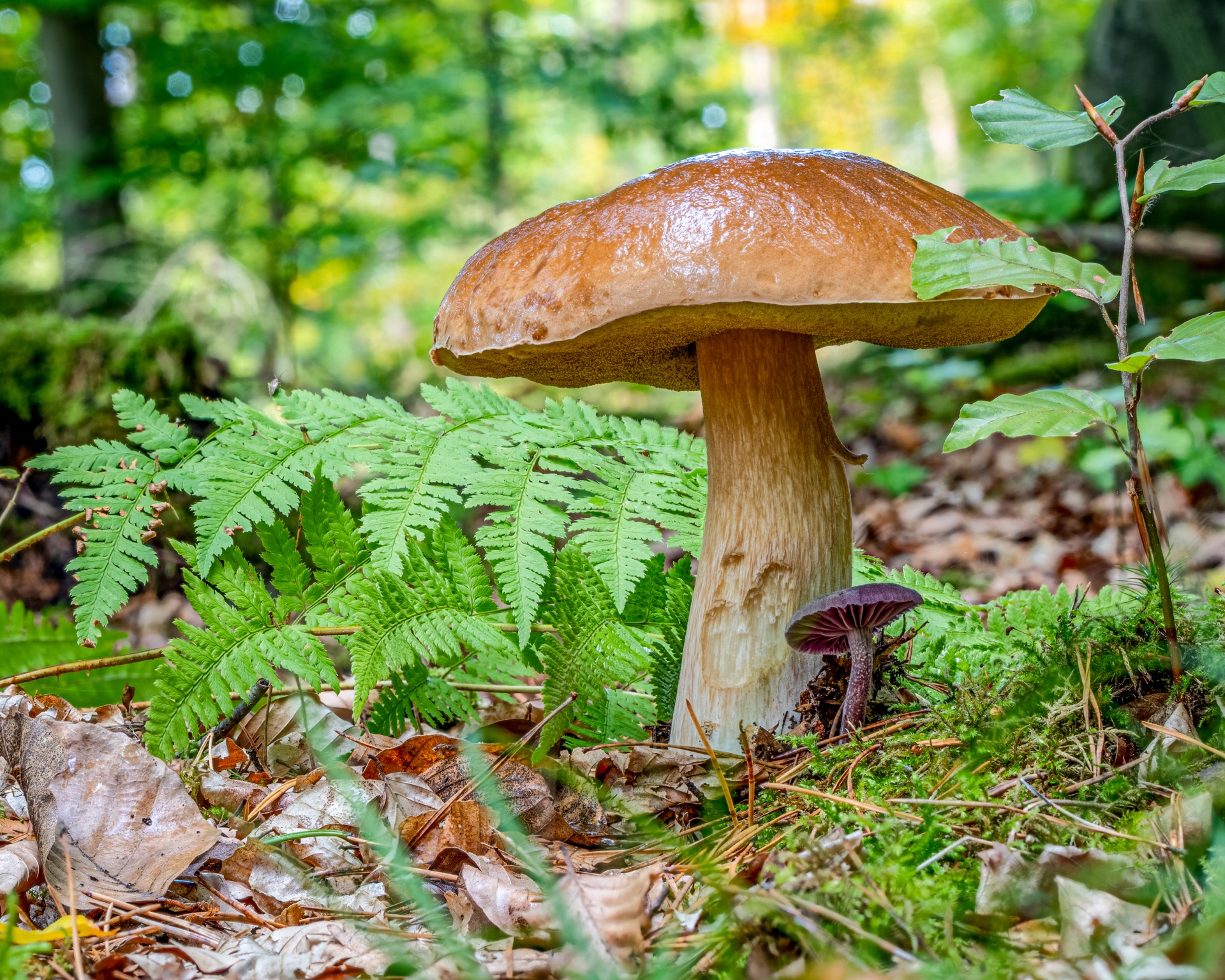
A king bolete emerging from the moss near a mountain stream in late August — brown cap, white stem, the mushroom the whole world calls porcini, here in its own forest.
物の哀れ · Mono no Aware
A single worm can ruin the whole cap before you reach it. The window between too early and too late is only days. You have to be there exactly now.
What the season brings?
Late August brings king bolete mushrooms (Boletus edulis, also called porcini) to Pacific Northwest mountain forests, with these prized edibles fruiting in cool, moist habitats near streams and in shaded mossy areas. King boletes are among the most sought-after wild mushrooms globally, prized for their rich, nutty flavor and meaty texture. In the Pacific Northwest, they fruit primarily at higher elevations (3,000-6,000 feet) in coniferous forests, forming mycorrhizal associations with spruce, fir, and hemlock. These distinctive mushrooms have thick white stems, brown caps that can reach 6-10 inches across, and yellowish pore surfaces instead of gills. King boletes are relatively easy to identify and have no deadly look-alikes, making them popular targets for mushroom hunters. They fruit most prolifically following warm, moist periods in late summer and fall, often appearing in the same locations year after year.
Convergence chain
Triggered by
Boletus edulis group mushrooms are mycorrhizal with spruce, fir, and pine at higher elevations; subalpine soil temperature stays cool year-round, so moisture is the sole limiting factor — the first significant August thunderstorm reaching subalpine soils is sufficient to trigger the flush
Enables
King bolete fruiting at elevation indicates healthy mycorrhizal networks connecting subalpine trees; red squirrels immediately cache dried fruiting bodies, spreading spores; king bolete emergence predicts the lowland chanterelle and matsutake flushes by 6-8 weeks; the mycorrhizal community they represent anchors conifer stability in thin subalpine soils
The cascade
First August thunderstorm reaches subalpine zone → king boletes push through fir and spruce duff → red squirrels cut and cache fruiting bodies on branches to dry → some fall and reinoculate soil below → mycelial activation signals reach down-slope connected networks → lowland chanterelles activated 6-8 weeks later by the same wave of mycelial activity → the mountain tells the lowland what's coming
Foods to Mark the Season
Native trailing blackberries (*Rubus ursinus*) linger at higher elevations as lowland wild blackberries wind down. Huckleberries are at their highest Cascade elevations (5,000–6,000 ft) in the final week before early frosts. Coho salmon are building toward their September peak in Puget Sound, coastal rivers, and the Columbia. Fall Chinook river fishing opens on Columbia tributaries.
Frequently Asked Questions
Visions of the Season
Read more
Each microseason is approximately 5 days, marking the subtle changes in nature throughout the year.