72 Microseasons of the Pacific Northwest
39/72: Jul 12 to 16
Thimbleberries ripen soft and sweet. Gentle red jewels in the summer shade.
What the season brings?
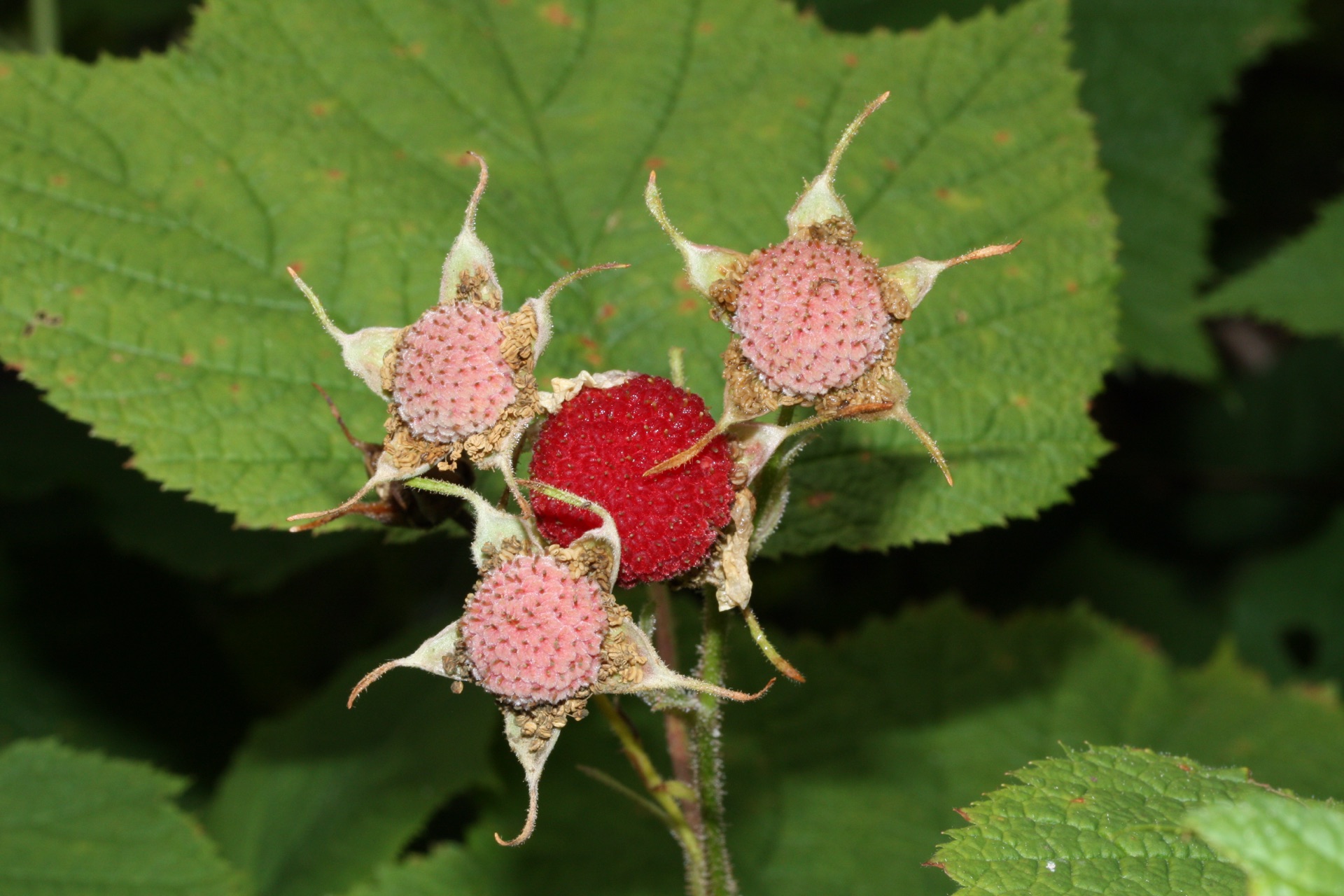
Mid-July brings the ripening of thimbleberries (Rubus parviflorus), with soft, bright red berries appearing on thornless shrubs throughout Pacific Northwest forests. These unique berries are shaped like thimbles or raspberries but are much softer and more delicate, often crushing at the slightest pressure. The berries have a mild, slightly tart flavor and are beloved by foragers despite being somewhat seedy. Thimbleberries grow prolifically in moist forests, along streams, and in disturbed areas, often forming dense stands in partial shade. The large maple-like leaves make the plants easy to identify even before berries appear. Indigenous peoples throughout the region ate thimbleberries fresh and sometimes dried them, though their soft texture makes preservation challenging. Today, thimbleberries are enjoyed fresh by hikers and wildlife alike, providing important food for birds, bears, and small mammals throughout the summer.
Foods to Mark the Season
Cascade huckleberries (*Vaccinium membranaceum*) begin ripening at 2,000–3,500 ft elevations—seek them in the Mt. Hood, Mt. Adams, and Mt. Rainier drainages. Sockeye salmon are running in the Columbia, prized for their deep-red flesh and rich fat content—one of the best eating salmon in the Pacific. Peaches begin ripening in the Yakima Valley and Rogue Valley, the first stone fruit peak of PNW summer.
Frequently Asked Questions
Visions of the Season
Read more
Each microseason is approximately 5 days, marking the subtle changes in nature throughout the year.